What to Wear in India as a Tourist: The Complete 2026 Dress Guide
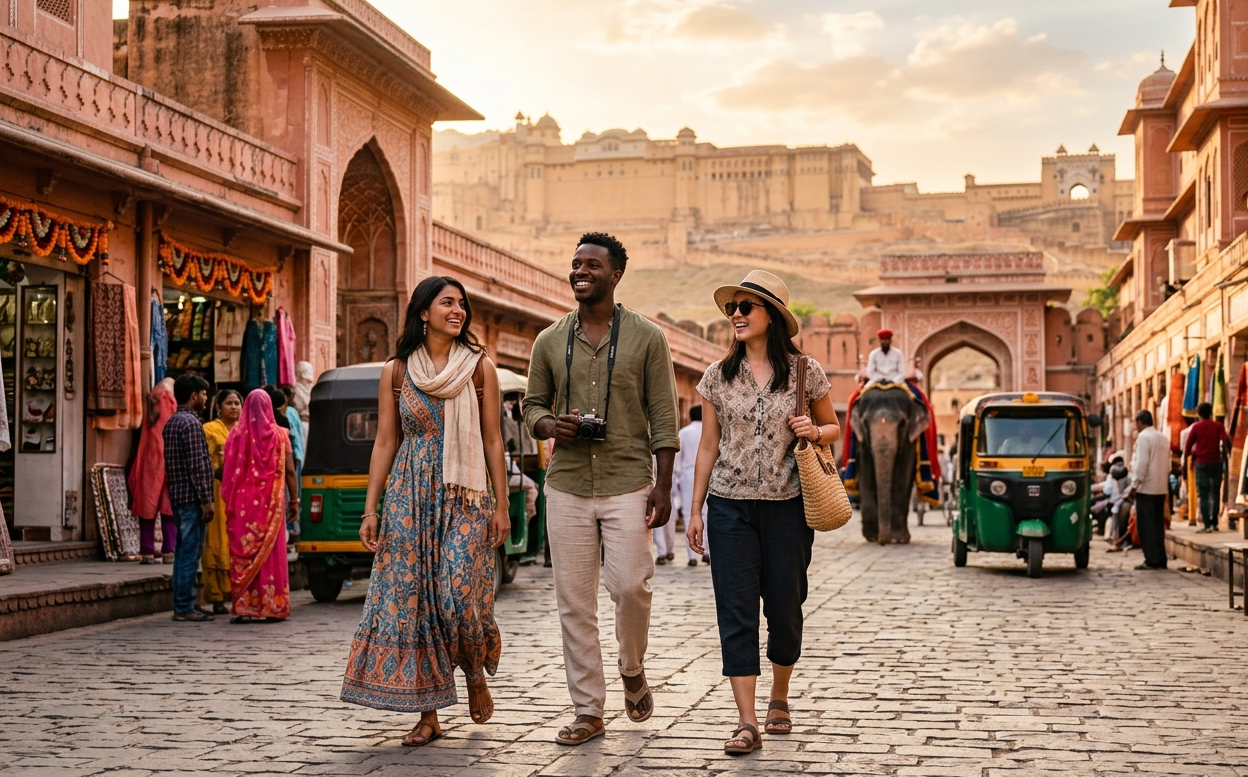
Quick Answer: Tourists in India should wear loose, lightweight, modest clothing that covers the shoulders and knees. Cotton and linen are the best fabrics for the heat. Always carry a scarf or shawl for temple visits. Avoid revealing clothing outside beach and resort areas. Packing light breathable layers beats both the heat and the dress codes.
Packing for India feels exciting — until you realise you have no idea whether your usual holiday wardrobe will land you in awkward situations or prevent you from entering a temple entirely.
India is not one place. It is 28 states, a dozen distinct climates, and a thousand cultural norms stacked on top of each other. What works on a Goa beach will earn stares in Varanasi. What passes in Delhi’s Khan Market would be inappropriate inside the Ajmer Sharif Dargah.
This guide gives you a clear, practical answer to what to wear in India as a tourist — by gender, by region, by season, and by type of site — so you can pack confidently and move freely.
Why Clothing Matters More in India Than Most Destinations
In India, clothing is not just fashion. It signals cultural awareness, religious respect, and social cues that locals read instantly.
According to the India Tourism Statistics Report 2023, over 6.4 million foreign tourists visited India in 2023 — and the most common friction point they reported at religious sites was being turned away or asked to cover up at the entrance.
Dressing appropriately in India will:
- Get you into every temple, mosque, and historic site without issue
- Signal respect to locals, which opens warmer interactions
- Protect you from sunburn and heat exhaustion
- Make you a less obvious target for scams and touts in tourist areas
The good news: appropriate dress in India is comfortable dress. Loose, breathable cotton is both culturally right and physically sensible for 35°C heat.
The 5 Golden Rules of Dressing in India as a Tourist
Follow these five rules and you will be dressed correctly for 95% of situations:
- Cover your shoulders and knees — the baseline for temples, mosques, and conservative areas everywhere
- Choose loose over fitted — loose clothing is cooler, more modest, and more comfortable on long travel days
- Pick cotton or linen — synthetic fabrics are miserable in Indian heat and humidity
- Always carry a scarf or dupatta — it doubles as a temple cover-up, sun protection, and dust shield
- Remove shoes willingly — you will remove footwear at temples, mosques, gurudwaras, and many homes; flip-flops make this easy
What to Wear in India: Women’s Guide
Everyday Wear
The single most versatile wardrobe choice for women visiting India is the salwar kameez — a long tunic worn over loose trousers. You can buy one anywhere in India for ₹300–₹800 (~$3–$10 USD). Locals will appreciate it, and it is far cooler than jeans in the summer heat.
Practical everyday options for women:
| Item | Why It Works |
|---|---|
| Salwar kameez | Modest, cool, easy to find locally, affordable |
| Loose cotton maxi skirt (ankle-length) | Covers legs, breathable, temple-appropriate |
| Linen wide-leg trousers | Smart enough for cities, modest enough for religious sites |
| Loose kurta (long Indian tunic) | Pairs with leggings or trousers, highly versatile |
| Cotton midi dress (with scarf) | Fine in cities; add scarf for temples |
What to avoid as a woman in India:
- Sleeveless tops in religious sites or conservative regions
- Short skirts or shorts outside beach areas
- Tight jeans or leggings without a long top over them
- Deep necklines, especially in smaller towns and villages
- Crop tops anywhere outside resorts or beach areas
For Temple and Religious Site Visits
Carry a lightweight scarf (a cotton or chiffon dupatta works best) in your bag at all times. Before entering any temple, mosque, gurudwara, or dargah:
- Drape the scarf over your head (required in gurudwaras and many mosques)
- Make sure your shoulders and knees are covered
- Remove your shoes at the entrance
- Avoid wearing leather in Jain temples
Many major temples like Tirupati Balaji (Andhra Pradesh) and Padmanabhaswamy Temple (Kerala) have specific dress code requirements — often traditional Indian clothing only. Check before you visit.
What to Wear in India: Men’s Guide
Men have slightly more flexibility in India, but cultural respect still shapes the choices.
Everyday Wear
| Item | Why It Works |
|---|---|
| Linen or cotton trousers | Cool, versatile, accepted everywhere |
| Cotton kurta | Traditional, breathable, widely respected |
| Light cotton shirts (long or short-sleeve) | Smart, adaptable, easy to layer |
| Loose cotton shorts (knee-length) | Fine in beach areas, cities, and casual contexts |
| Chinos or linen pants | Good for cities, business visits, upscale restaurants |
What to avoid as a man in India:
- Very short shorts in religious sites or smaller towns
- Tank tops or no shirts outside beach areas
- Camouflage print clothing (can be confused with military dress)
- Wearing shoes inside temples — always opt for slip-ons over laces
South Indian Temple Dress Code for Men
This surprises many tourists: in most traditional South Indian temples (particularly in Tamil Nadu and Kerala), men are required to remove their shirts to enter. Wearing a dhoti (a white cloth wrapped around the waist and legs) is often mandatory. Temples will usually rent or provide a dhoti at the entrance if you do not have one.
India Clothing Guide by Region
India’s regions have different norms. Here is a quick-reference map:
| Region | Cities | Dress Code Level | Notes |
|---|---|---|---|
| North India | Delhi, Agra, Jaipur (Golden Triangle) | Moderate–Conservative | Cover up near religious sites; cities are liberal |
| Rajasthan | Jaipur, Jodhpur, Udaipur, Jaisalmer | Moderate | Colourful, traditional attire appreciated; conservative in rural areas |
| South India | Chennai, Kochi, Mysuru, Mahabalipuram | Conservative–Moderate | Temple dress codes are stricter; modest dress respected citywide |
| Goa | Panaji, Palolem, Baga Beach | Liberal | Beachwear on beaches; cover up in churches and markets |
| Mumbai | South Mumbai, Bandra, Colaba | Liberal–Moderate | Most cosmopolitan city; western dress fine |
| Kerala | Munnar, Alleppey, Kovalam | Moderate | Modest dress for interiors; beaches more relaxed |
| Himalayas | Manali, Leh-Ladakh, Rishikesh | Moderate | Cold weather essentials; Rishikesh is spiritual — dress modestly |
| Varanasi / Ayodhya | Holy cities | Conservative | Modest clothing essential; religious sites strict |
| Northeast India | Meghalaya, Assam, Sikkim | Moderate | Respectful casual; tribal areas — observe local norms |
What to Wear in India by Season
October to February (Cool/Winter)
The best time to visit most of India. Days are warm, nights can be surprisingly cold — especially in North India and the Himalayas.
Pack:
- Cotton kurtas and shirts for days
- A light fleece or wool sweater for evenings
- A medium-weight jacket for North India evenings (Rajasthan deserts drop to 5°C at night)
- Thermal base layers if heading to Ladakh or the Himalayas in December–January
March to May (Hot/Pre-Monsoon)
The hottest months. Temperatures in North India regularly exceed 40°C.
Pack:
- Only loose, light cotton or linen
- Light colours (dark colours absorb heat)
- UV-protection shirts for long walks and outdoor sites
- A wide-brimmed hat
- Sunglasses
June to September (Monsoon)
Humid, wet, and warm across most of India. Goa, Kerala, and Rajasthan are best avoided. The Himalayan foothills and the northeast are beautiful in monsoon.
Pack:
- Quick-dry fabrics (cotton still works; avoid silk and linen in heavy rain)
- Sandals or water-friendly shoes over closed leather shoes
- A lightweight packable rain jacket
- Extra pairs of everything — things take longer to dry
Footwear for India: What to Bring
Good footwear is underrated on India packing lists. You will walk more than you expect.
Best options:
- Birkenstocks or leather sandals — comfortable, easy to remove for temples, survive varied terrain
- Lightweight trainers — cities, trekking, hill stations
- Flip-flops — beaches, casual days, and for wearing into temples (easy to remove)
- One pair of closed-toe shoes — for cities, nights out, and areas with rough pavements
Avoid: Brand-new leather shoes (painful and hard to remove at temples), heels (pavements are uneven), and white trainers (India’s red dust stains everything quickly).
What Tourists Should NOT Wear in India
Packing these is a fast route to discomfort, denied entry, or unwanted attention:
Avoid packing:
- Very short shorts or micro-miniskirts — outside beach resorts, these attract unnecessary attention
- Revealing tops (crop tops, backless, very low necklines) — fine in your hotel; out of place in markets, temples, or public transport
- Camouflage print — can be perceived as military impersonation in some areas
- Leather items for Jain temples — leather is prohibited inside Jain religious sites
- White clothing only — white is traditionally a colour of mourning in India; not a rule, but be aware
- Tight synthetic fabrics — you will overheat and be uncomfortable
Shopping for Clothes in India: The Smart Move
Here is what most experienced India travellers do: pack light and buy locally.
India produces some of the world’s finest cotton, linen, and silk. In any market — from Jaipur’s Johari Bazaar to Delhi’s Janpath or Kolkata’s New Market — you will find lightweight cotton kurtas, salwar kameez sets, and linen trousers for ₹200–₹1,500 ($2–$18 USD).
Buying locally means:
- Your clothes fit the climate perfectly (local tailors know what works)
- You respect the dress norms automatically
- You go home with beautiful, unique pieces
- You pack a lighter bag going in
For women especially, buying a salwar kameez or two on arrival in India is the single smartest clothing decision you can make.
India Packing List: Clothing Essentials
Women’s Core Packing List
- 3–4 loose cotton tops or kurtas
- 2 pairs of linen or cotton trousers
- 1 light maxi or midi skirt (cotton)
- 2–3 lightweight scarves / dupattas (pack these, they are multipurpose)
- 1 light cardigan or fleece (evenings and air-conditioned spaces)
- 1 modest swimsuit + cover-up (if visiting beaches or resorts)
- Comfortable sandals, trainers, and flip-flops
Men’s Core Packing List
- 3–4 cotton shirts (short-sleeve for heat; one long-sleeve for temples)
- 2 pairs of linen or cotton trousers
- 1 pair of knee-length shorts
- 1–2 cotton kurtas
- 1 light fleece or jacket (evenings, November–February)
- Sandals, trainers, and flip-flops